
How to style with Throw Pillows | Designer Finds
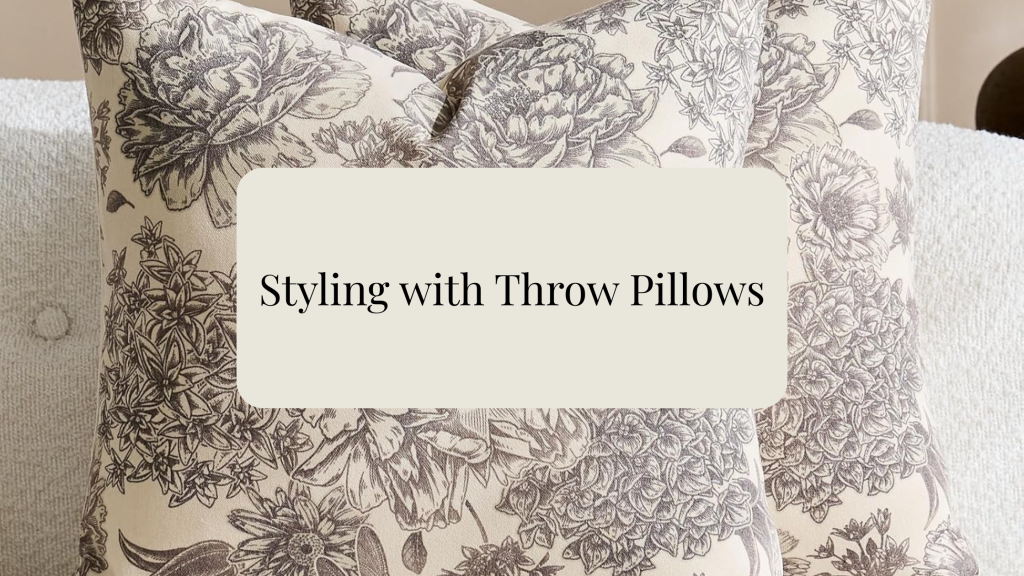
Hey everyone! One of my favorite décor items to shop for is throw pillows. They are such a simple yet beautiful way to refresh a space. Pillows can bring in pops of color, gorgeous textures, pattern, and visual interest, helping a room feel more styled and complete. Want a quick redesign without changing your furniture? Simply swap out your pillows. You can create a whole new look from season to season by changing the colors, fabrics, and patterns. Design Tip: Keep your larger furniture pieces, such as your sofa, in a neutral palette. This makes it much easier to change out your decorative accents over time and refresh your space without having to start from scratch. Selecting your pillows Steps Step-by-Step Guide to Designing with Throw Pillows Throw pillows are one of the easiest ways to make a room feel finished, styled, and cozy. They add color, texture, comfort, and personality without having to redesign the whole space. Step 1: Start with the Room’s Color Palette Before choosing pillows, look at the colors already in the room. Pull colors from: Area rug Artwork Curtains Accent chairs Wood tones Wall color Décor pieces A good rule is to choose 2–3 main pillow colors that connect back to the room. This keeps everything looking intentional instead of random. Example:If your room has beige walls, a navy rug, and warm wood furniture, you could use pillows in cream, navy, rust, and soft tan. Step 2: Mix Pillow Sizes Using all the same size can look flat. Layering different sizes gives the sofa, bed, or chair more depth. For a sofa, try: 22×22 pillows in the back 20×20 pillows in the middle One lumbar pillow in front For a bed, try: Larger pillows in the back Medium decorative pillows in front One long lumbar pillow across the front This creates a designer-style layered look. Step 3: Mix Patterns Carefully Patterns make pillows interesting, but too many can feel busy. A simple formula: One large pattern + one small pattern + one solid Example: Large floral pillow Small stripe pillow Solid velvet or linen pillow You can also mix: Stripes Florals Plaid Geometric prints Vintage-inspired patterns The key is making sure they share similar colors. Step 4: Add Texture Texture is what makes pillows feel cozy and high-end. Try mixing materials like: Linen Velvet Bouclé Cotton Woven fabric Faux leather Knitted textures Fringe or tassels Even if you stay neutral, texture keeps the design from looking boring. Example:Cream linen + beige boucle + tan leather + woven stripe looks calm but still interesting. Step 5: Use Odd Numbers for a Relaxed Look Odd numbers usually feel more natural and less stiff. For a sofa: Small loveseat: 3 pillows Standard sofa: 5 pillows Large sectional: 7 or more pillows For a more formal look, use even numbers and keep both sides balanced. Step 6: Think About Shape Not every pillow has to be square. Use a mix of: Square pillows Lumbar pillows Round pillows Bolster pillows A lumbar pillow is especially helpful because it breaks up all the square shapes and makes the design feel more custom. Step 7: Balance Both Sides Your pillows do not have to match exactly, but they should feel balanced. For example, one side of the sofa could have: Large solid pillow Patterned pillow Small lumbar The other side could have: Large textured pillow Coordinating pattern pillow They are different, but the colors and sizes still work together. Step 8: Don’t Overcrowd the Furniture Pillows should make the space comfortable, not make people feel like they have nowhere to sit. A good test:Can someone sit down without removing every pillow? If not, there may be too many. Step 9: Choose the Right Inserts This is one of the biggest designer tricks. Use pillow inserts that are 1–2 inches larger than the pillow cover. Example: 20×20 cover → use a 22×22 insert 22×22 cover → use a 24×24 insert This makes the pillows look fuller and more luxurious. Step 10: Style Them Naturally You can do the classic “karate chop” in the center of larger pillows, but don’t overdo it. Let the pillows look soft, comfortable, and lived-in. For a cozy home look, slightly angle the pillows instead of lining them up perfectly straight. Easy Designer Pillow Formula For a sofa: 2 large solid pillows + 2 patterned pillows + 1 lumbar pillow For a bed: 2 large pillows + 2 medium pillows + 1 long lumbar pillow For an accent chair: 1 beautiful pillow or 1 lumbar pillow Final Design Tip Throw pillows should feel like they belong in the room, not like they were added at the last second. Repeat colors, mix textures, vary sizes, and keep the overall feeling comfortable and practical. That is what gives a space that styled, designer-finished look. Designer Finds I’ve selected some amazing pillows for you to check out! Click on images below. Many awesome pillows to choose from. Some of these are pillow covers and others are not. |These links are affiliate links. There is no cost to you. If you make a purchase I might get a small commission. This helps me to keep my blog going. Disclosures & Privacy Policy| When designing your space with pillows what size do you choose for a sofa and a bed? How many do you get? I’ve created a guide you can follow. Looking to redesign your home? Needing some guidance on how to pull it all together? I would love to help. Let’s chat about your next project. Check out how my E-Design Services can help you. Click here These other blogs might be of interest to you. Check it out! 6 Steps How to design your home Design Tip: Area Rug Arrangement Design Tip: Window Treatment Design Tip: Art Hanging Want to stay in touch? Join my Newsletter! I share each week design tips, inspirations and decor finds etc.
How to Style a Night Stand
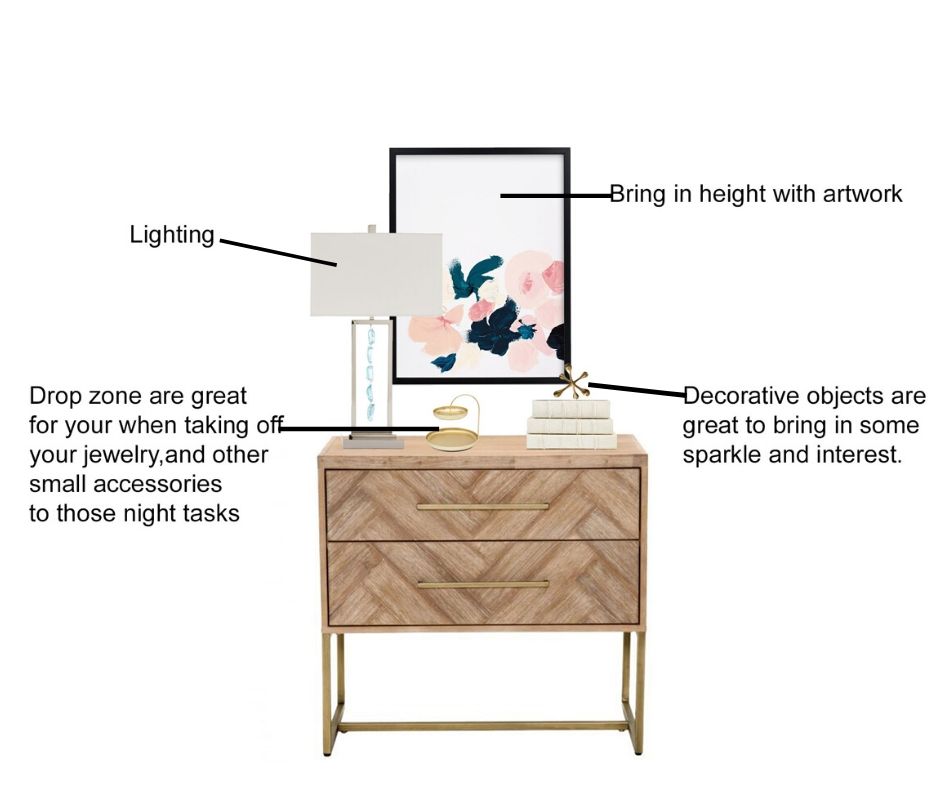
When decorating your room styling the top of furniture pieces like a night stand, console table and even your dresser are important and need to be addressed. Selecting just a few mindful pieces will bring that furniture piece from being boring into looking more put together. Design Steps: How to Style a Nightstand A nightstand may be small, but it plays a big role in your bedroom design. It should be both beautiful and functional — giving you a place for everyday essentials while also adding style and personality to your space. 1. Start with the Right Size Choose a nightstand that works with the height of your bed. Ideally, the top of your nightstand should be about the same height as your mattress, or just slightly higher. This makes it easier to reach for a lamp, book, or glass of water. 2. Add Lighting A table lamp or wall sconce is one of the most important pieces for a nightstand. It adds warmth, creates a cozy glow, and gives you practical lighting for reading or relaxing at night. 3. Keep Everyday Items Close Think about what you actually use before bed. This could be a book, reading glasses, lotion, lip balm, a small dish for jewelry, or a glass of water. Keep these items organized so the nightstand still feels clean and intentional. 4. Add Something Decorative Bring in one or two decorative accents to give your nightstand personality. A small vase, candle, framed photo, decorative box, or greenery can soften the look and make the space feel more styled. 5. Use a Tray or Bowl A small tray, bowl, or dish helps corral smaller items so they do not look cluttered. This is perfect for jewelry, watches, remotes, or nighttime essentials. 6. Create Height and Balance When styling your nightstand, mix different heights. For example, pair a taller lamp with a lower candle, stacked books, or a small decorative object. This helps the design feel layered and balanced. 7. Do Not Overcrowd It Less is more. A nightstand should feel peaceful, not cluttered. Leave a little empty space so it looks clean, calming, and easy to use. 8. Connect It to the Room Your nightstand should flow with the rest of your bedroom. Repeat colors, textures, or finishes already used in the room, such as wood tones, metal finishes, soft linens, or accent colors. This helps create a cohesive, designer-inspired look. A well-styled nightstand should feel practical, pretty, and peaceful — the perfect finishing touch to a beautifully designed bedroom. Shop the look I’ve rounded up some of my favorite decor items I wanted to share with you today. Click on the numbers by each word under the photos and it will go directly to site for your convenience. Note: These may contain affiliates links. I might receive a small commission if you purchase something. Don’t you worry there is no extra cost to you. This helps me keep this blog going. Disclosures & Privacy Policy Nightstand- 1/ 2/ 3/ 4/ 5 Lamps- 1/ 2/ 3/ 4/ 5 Wall Hanging- 1/ 2/ 3 / 4/ 5 Drop Zone- 1/ 2/ 3/ 4 Personal Touch- 1/ 2/ 3/ 4 / 5 Check out these other How to’s Blog post 6 Steps How to design your home How to Create a color Palette for your home Key Aesthetics for a Zen Bedroom Needing help with your home or help selecting the right products for your nightstand, let’s talk about your project! I collaborate with clients throughout the USA all online. By taking your inspiration, I will put together a cohesive design for your space that is tailored to you personal design style and lifestyle. I do all of this within your budget. Want to know more on how E-Design works? Let’s talk! e-design contact me
How to create a color palette for your home

Have you ever found yourself scrolling through Pinterest or Instagram, saving all those beautiful interiors you’re absolutely loving? You notice how every space looks so pulled together, layered, and intentional — and you think, “Wow, I wish my home could look like that.” Well, the good news is… it can. Creating a designer-inspired home is all about building a cohesive look that flows naturally from room to room. It’s not just about making one space, like your living room, look beautiful. The goal is to create a home that feels connected, balanced, and thoughtfully designed throughout. When your colors, textures, furniture styles, and décor choices work together, your entire home begins to feel more polished and complete — almost like you had a designer come in and pull it all together for you. Here are a few simple tips to help you create a more cohesive look throughout your home. Where do you find your color palette Create a color palette. You can get your color palette from: Your favorite color From inspirational pictures. Artwork or area rugs anything that you just need to have in your life structural elements that can’t move Example: kitchen cabinets, flooring and counter tops 1.Favorite colors Do you have a favorite color? Is it a color that would look great in the home? Your favorite color can be spread throughout your home. That would be your great POP of color. For Instance, my favorite color is Blue. I would use that color as my main pop color/ accents. I would add blue in the accent pillow, in the rug and accent pieces. 2.Overall feeling from Inspirational pictures Grab a few pictures from Pinterest and Instagram and create a board. Select anything that catches your eye. Take a look do you see the types of colors and styles you are drawn to? Inspiration pictures can help guide you with your color palette and how your overall style will be. 3. Artwork and Area Rugs Artwork and an area rugs are great ways in coming up with your color palette. Loving an art piece that is in your home or it might be in a store that you have been eyeing all this time? Take a look in the colors being used. Select 1-2 colors out of that piece. You don’t have to use all the colors in the piece just select a few. How to create your color palette 1. Select a neutral select 1 or 2 neutral colors. Neutrals for instance like gray, taupe, tan, brown, cream and black 2. Select a white The white or off white will help coordinate with the neutral colors. The white could be used on the trim, ceiling and doors. 3. Select your pop of color then add 1 shade lighter This is your overall color that will be seen throughout your home. How to use your color palette 1. Main color The neutral will be your main color and overall wall color. Use that main color in different ways throughout your home. This helps coordinates with the neutral. The white could be used on the trim, ceiling and doors. I suggest starting with a neutral sofa. For one main reason if you chose just say a “red sofa” because you liked how it looked at the time or you were following a trend. Then you started not liking this sofa? Will you replace it? If you don’t mind spending money then this would be fine. I suggest investing in a good neutral sofa. You want quality and durability. It’s more affordable to replace throw pillows, artwork and area rugs then keep replacing a sofa. Also, choosing a neutral sofa is easier to coordinate the colors throughout the home. Down the road you have decided that you wanted a change. You already have a neutral canvas already to work with from your neutral sofa and walls. 2. Pop of color The color would be seen on accent walls on pillows and accent chairs. The shade lighter will give you depth . Tip: Colors should be repeated 3 times in the room to help create the cohesive look. 3. Select an accent color The accent color would be the main pop colors complementary color and/or shade lighter of that color. This color will compliment the main color. Inspiration Photo Let’s look at an example. What’s the color palette in this picture? The neutral is white, and black. The pop of color is blue and green and the accent is gold. You will then use these colors throughout your home. Needing help with your home, let’s talk about your project! I collaborate with clients in the throughout the USA all online. By taking your inspiration, I put together a cohesive design for your space that is tailored to you personal design style. I do all of this within your budget. LET’S COLLABORATE Color palette inspiration boards